MBA Program Requirements Simplifying Your Path Ahead
MBA Program Requirements set the stage for aspiring business leaders to navigate their educational journey with clarity and confidence. These prerequisites encompass a range of factors including academic qualifications, standardized tests, and professional experience that applicants must consider to strengthen their candidacy. Understanding these requirements can greatly enhance your chances of admission and help you craft a compelling application that resonates with admissions committees.
The landscape of MBA programs is diverse, featuring various structures, formats, and expectations that cater to students from different backgrounds. By getting acquainted with the core elements of MBA admissions, you can better prepare yourself to meet the challenges ahead and thrive in your future academic endeavors.
Overview of MBA Program Requirements
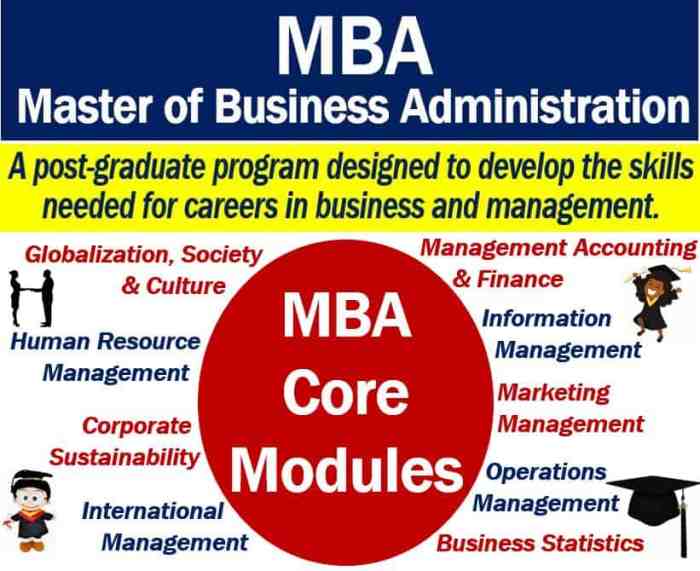
MBA programs are designed to equip students with advanced business knowledge and leadership skills applicable across various industries. These programs typically encompass a blend of core courses, electives, and experiential learning opportunities. Understanding the requirements for admission and successful completion of these programs is crucial for prospective students. Meeting prerequisites is essential not only for a smooth application process but also for ensuring that candidates are prepared for the rigorous academic environment of an MBA.The general structure of an MBA program includes foundational courses that cover essential business disciplines such as finance, marketing, operations, and organizational behavior.
These core requirements are designed to provide a well-rounded understanding of the business landscape and prepare students for specialization. Most MBA programs also incorporate practical experiences, such as internships or capstone projects, which allow students to apply theoretical knowledge in real-world settings.
Core Requirements of MBA Programs
Core courses are fundamental to the MBA curriculum and serve as the backbone of the educational experience. The following subjects are typically included as part of the core requirements:
- Accounting: Understanding financial statements, budgeting, and the principles of accounting is essential for effective business management.
- Finance: This area covers investment analysis, capital markets, and financial management techniques crucial for strategic decision-making.
- Marketing: Students learn about market research, consumer behavior, and marketing strategies that drive business success.
- Operations Management: Focuses on optimizing processes, supply chain management, and production efficiency.
- Organizational Behavior: Examines how individuals and groups act within organizations, emphasizing leadership and team dynamics.
Importance of Meeting Prerequisites
Prior to applying to an MBA program, it is vital for candidates to fulfill specific prerequisites. These typically include a bachelor’s degree and, in many cases, relevant work experience. Meeting these requirements not only strengthens an application but also ensures that candidates possess the foundational knowledge and skills necessary for MBA coursework. A common prerequisite is the Graduate Management Admission Test (GMAT) or the Graduate Record Examination (GRE), which assesses analytical writing, quantitative reasoning, and verbal skills.
A strong performance on these tests can significantly enhance a candidate’s prospects for admission.
Typical Duration and Format of MBA Programs
MBA programs can vary in duration and format, accommodating the diverse needs of students. Generally, full-time MBA programs last about two years, while part-time options may extend to three or four years, allowing students to balance work and study. Many institutions also offer accelerated programs that can be completed in as little as one year.Programs may be delivered in various formats, including traditional in-person classes, online courses, or hybrid models that combine both methods.
Online MBA programs have become increasingly popular, providing flexibility for students who may be working full-time or have other commitments.
“The right MBA program can pivot your career trajectory, opening doors to leadership positions and enhanced earning potential.”
In conclusion, understanding these core requirements and the structure of MBA programs is essential for prospective students aiming to leverage their education for career advancement.
Academic Qualifications
The academic qualifications for MBA applicants play a crucial role in the admissions process. Institutions typically seek candidates with a solid educational foundation, as this often correlates with the capability to succeed in a rigorous graduate program. The prerequisite is usually an undergraduate degree, which signals a candidate’s readiness for advanced studies. Common educational backgrounds for MBA applicants include various disciplines, showcasing the program’s interdisciplinary nature.
While business degrees are frequently seen, many programs welcome candidates from diverse academic fields. This approach enriches classroom discussions and fosters a broader understanding of business concepts.
Acceptable Undergraduate Degrees for MBA Entry
The range of acceptable undergraduate degrees for MBA programs is quite expansive. Admissions committees often evaluate candidates based on their academic rigor, critical thinking skills, and analytical capabilities. Degrees from various fields can provide a strong foundation for business studies. This inclusivity helps foster a rich environment where diverse perspectives are valued.Examples of acceptable undergraduate degrees include:
- Business Administration
- Economics
- Engineering
- Mathematics
- Psychology
- Sociology
- Political Science
- Computer Science
Each of these degrees offers unique skills and insights that can enhance the learning experience and contribute to the overall dynamic of the MBA program.
Significance of GPA and Academic Performance
GPA and academic performance significantly influence the admissions process for MBA programs. Institutions often use these metrics to gauge a candidate’s potential for success in their rigorous curriculum. A strong academic record reflects a candidate’s ability to handle complex material and demonstrates discipline and commitment to their studies.Typically, a competitive GPA falls within the range of 3.0 to 3.5 on a 4.0 scale, although some top-tier programs may look for even higher averages.
Consistently high grades, particularly in quantitative courses, can enhance an application and offset lower scores in other areas.
“A strong GPA not only highlights academic ability but also reflects dedication and resilience, qualities essential for succeeding in graduate studies.”
Moreover, the admissions committee often reviews the context of a candidate’s academic journey, considering the rigor of the undergraduate program, trends in GPA, and any relevant coursework that aligns with business principles. This holistic approach ensures that candidates are evaluated fairly, allowing promising individuals from various backgrounds to showcase their potential for contributing to the MBA community.
Standardized Tests

Source: indiacsr.in
Standardized tests, such as the GMAT (Graduate Management Admission Test) and GRE (Graduate Record Examination), play a pivotal role in the MBA admissions process. These assessments are designed to evaluate a candidate’s analytical, quantitative, verbal, and reading skills, which are crucial for success in a rigorous MBA program. Admissions committees often use these scores to gauge the potential of applicants and to ensure a certain level of competency among students entering their programs.
Role of Standardized Tests in Admissions
Standardized tests serve as a common evaluation metric for applicants from diverse academic and professional backgrounds. In many cases, the GMAT is preferred by traditional MBA programs, while the GRE may be accepted by a wider range of programs, including some online and executive options. The scores from these tests can significantly influence an applicant’s chances of admission, especially in highly competitive programs.
The following are minimum score requirements for various MBA programs:
- Top-tier programs like Harvard Business School and Stanford Graduate School of Business often look for GMAT scores above 700.
- Mid-tier programs may accept scores in the range of 600-700, providing a more flexible threshold for candidates.
- Some institutions may accept GRE scores, with a typical equivalent GMAT score of around 300-320 for admission consideration.
The differences in score requirements highlight the varying levels of competitiveness among MBA programs. Candidates aiming for top-tier schools typically need to invest significant effort into preparation to meet or exceed these benchmarks.
Test Preparation and Score Submission
Preparing for standardized tests involves a structured approach to studying and practice. Candidates often utilize a combination of test prep books, online courses, and practice exams to familiarize themselves with the test format and types of questions asked. Many test-takers also benefit from joining study groups or hiring tutors to enhance their preparation.Once the test is completed, candidates must submit their scores to the institutions they are applying to.
Each school has its own process for score submission:
- Most schools allow candidates to send scores directly from the testing agency (GMAC for GMAT and ETS for GRE).
- Some programs allow self-reported scores during the application process, with official scores required upon admission offer acceptance.
- It is important to pay attention to deadlines for score submission, as late scores may hinder the application process.
In conclusion, standardized tests such as the GMAT and GRE are integral to the MBA admissions landscape, shaped by varying score requirements and preparation strategies that candidates must navigate to enhance their prospects for acceptance.
Professional Experience: MBA Program Requirements
The role of professional experience in MBA applications is significant, as it demonstrates not only your practical knowledge but also your ability to contribute to the program’s collaborative learning environment. Admissions committees often look for candidates who have a solid background in their field, as this experience can provide valuable insights during discussions and group projects.When considering how different types of professional backgrounds can influence your chances of admission, it’s essential to recognize that diversity in experiences can enrich the learning experience for everyone involved.
Applicants from various industries, such as finance, healthcare, technology, and non-profit, bring unique perspectives that can enhance classroom discussions. A candidate with a technical background may contribute analytical skills, while someone from a creative field might offer innovative problem-solving approaches.
Presenting Work Experience Effectively
Articulating your professional experience in your application materials is crucial. Highlighting your achievements, responsibilities, and skills gained can significantly impact how the admissions committee perceives your candidacy. Here are some guidelines for effectively presenting your work experience:
Detail Job Responsibilities
Clearly Artikel your roles and responsibilities at each position. Use action verbs to describe your contributions, emphasizing aspects that demonstrate leadership, teamwork, and initiative.
Quantify Achievements
Whenever possible, include metrics that showcase your impact. For instance, “Increased sales by 30% within six months” provides concrete evidence of your effectiveness.
Use a Clear Format
Organize your work experience in reverse chronological order, starting with your most recent role. This clarity helps admissions staff quickly grasp your career trajectory and professional growth.
Tailor Content to Program Focus
Research the MBA program and align your professional experiences with its values and goals. For example, if the program emphasizes entrepreneurship, highlight experiences that demonstrate your innovation and risk-taking abilities.
Include Leadership Roles
Emphasize any leadership positions you’ve held, even if they were informal. Leadership skills are highly valued, and showcasing them can set you apart from other candidates.
Reflect on Learning
Briefly discuss what you learned from each experience. Demonstrating self-awareness and the ability to grow from your experiences can positively influence your application.By effectively presenting your work experience, you enhance your narrative, making it clear to the admissions committee that you not only have the capability of succeeding in the program but also the potential to contribute meaningfully to the MBA community.
Letters of Recommendation
Letters of recommendation are a critical component of the MBA application process. These letters provide insights into your character, work ethic, and potential for success in a rigorous academic environment. They offer admissions committees a chance to see how others perceive your contributions and capabilities, adding depth to your application.The purpose of letters of recommendation is to validate your achievements, highlight your strengths, and provide a third-party perspective on your qualifications.
Strong letters can significantly enhance your application by showcasing specific examples of your skills and accomplishments. They should ideally come from individuals who know you well in a professional or academic context and can speak knowledgeably about your abilities and experiences.
Selecting Recommenders
Choosing the right recommenders is essential for crafting powerful letters. The individuals you select should have a strong understanding of your work and character. It’s beneficial to choose recommenders who can articulate your strengths relevant to the MBA program. Here are key considerations when selecting your recommenders:
- Professional Experience: Choose someone who has supervised you directly, such as a manager or team leader, who can provide specific examples of your professional contributions.
- Academic Background: If applicable, select a professor or academic advisor who can speak to your academic abilities, especially if you excelled in relevant courses.
- Relevance to MBA Goals: Opt for recommenders who understand your career aspirations and can align your experiences with your future goals.
- Relationship Quality: Prioritize individuals who have a strong, positive relationship with you and can provide an authentic and enthusiastic endorsement.
Approaching Recommenders
Approaching potential recommenders can be a delicate process. It’s important to prepare adequately to ensure your request is well-received. Here’s a checklist to guide applicants in this regard:
- Identify Potential Recommenders: List individuals who align with the criteria mentioned above.
- Request in Person: If possible, make your request in person or via a video call to convey sincerity and allow for an engaging conversation.
- Provide Context: Share your career goals, reasons for pursuing an MBA, and why you’re asking them specifically to write your letter.
- Give Adequate Notice: Approach your recommenders well in advance of the deadline, ideally 4-6 weeks, to give them ample time to craft a thoughtful letter.
- Share Relevant Materials: Offer your resume, personal statement, or any specific points you’d like them to address to help them write a comprehensive letter.
- Follow Up: Send a polite reminder a week or two before the deadline to ensure your recommender has everything they need to submit on time.
- Express Gratitude: Regardless of their decision, thank your recommenders for their time and consideration.
“A strong letter of recommendation can be a game-changer in your MBA application.”
Personal Statement and Essays
Crafting a compelling personal statement is a crucial aspect of the MBA application process. This narrative allows applicants to express their individuality, motivations, and aspirations, providing the admissions committee with insight into their personal journey and professional goals. It’s not just about listing achievements but about telling a story that resonates with the values of the program.To effectively structure essays that align with program values and expectations, applicants should focus on clarity, authenticity, and relevance.
Each essay should reflect the applicant’s personality while addressing specific prompts or themes Artikeld by the program. This alignment not only demonstrates the applicant’s understanding of the program but also their genuine interest in becoming a part of the academic community.
Significance of a Compelling Personal Statement
A compelling personal statement can significantly differentiate candidates in a competitive applicant pool. It provides an opportunity to present unique experiences that shaped one’s career path and aspirations. Essential elements to consider include:
- Authenticity: Share genuine experiences that reflect your true self, avoiding generic statements.
- Reflection: Discuss the lessons learned from pivotal moments in your life or career that influenced your decision to pursue an MBA.
- Alignment: Clearly link your experiences and future goals with the values and mission of the MBA program you are applying to.
Strategies for Structuring Essays, MBA Program Requirements
A well-structured essay is easier to read and understand. Applicants should consider the following strategies:
- Clear Thesis: Start with a strong thesis statement that encapsulates the main point of your essay.
- Organized Flow: Use logical transitions between paragraphs to guide the reader through your narrative smoothly.
- Specific Examples: Use anecdotes and specific examples to illustrate your points, making your essay more relatable and engaging.
Themes and Topics that Resonate with Admissions Committees
Certain themes and topics tend to appeal to admissions committees due to their relevance and depth. Applicants might consider exploring:
- Leadership Experiences: Highlight instances where you demonstrated leadership skills, the challenges faced, and the impact made.
- Career Aspirations: Discuss your long-term career goals and how the MBA will help you achieve them.
- Overcoming Adversity: Share personal or professional obstacles you have overcome and the insights gained from those experiences.
“Your personal statement is your chance to show the admissions committee who you are beyond your grades and test scores.”
In summary, dedicating time and effort to crafting an authentic and well-structured personal statement and essays can significantly enhance your MBA application, enabling you to present a compelling case for your admission into the program of your choice.
Interview Process

Source: vecteezy.com
The interview process for MBA programs is a critical component, allowing candidates to present their personal and professional narratives in a more dynamic setting. This stage provides an opportunity for both the institution and the candidate to assess mutual fit beyond the written application components. MBA interviews typically follow a structured format that may vary based on the institution. Most often, candidates can expect a combination of behavioral and situational interview questions designed to elicit insights into their decision-making processes and leadership potential.
Typical Structure and Format of MBA Interviews
Generally, MBA interviews may include one-on-one sessions with admissions committee members or alumni, conducted in person or virtually. The structure usually consists of the following segments:
- Introduction: Candidates often begin with a brief personal introduction, highlighting their background, career aspirations, and reasons for pursuing an MBA.
- Behavioral Questions: Interviewers inquire about past experiences and challenges faced, utilizing the STAR method (Situation, Task, Action, Result) for clarity in responses.
- Situational Questions: Candidates are presented with hypothetical scenarios to evaluate their problem-solving skills and ability to think critically.
- Questions for the Interviewer: Candidates are encouraged to ask questions about the program, culture, and specific opportunities, demonstrating their interest and engagement.
Preparation Techniques for the Interview
Effective preparation for MBA interviews is essential in showcasing personal and professional strengths. Candidates should employ several techniques to enhance their performance:
- Research the Program: Understanding the program’s values, culture, and specific features can help tailor responses to align with the institution’s expectations.
- Mock Interviews: Practicing with peers or mentors can provide valuable feedback and boost confidence before the actual interview.
- Self-Reflection: Reviewing personal experiences and achievements will enable candidates to articulate their narratives and how they relate to the MBA journey.
- STAR Technique: Utilizing this method ensures that responses to behavioral questions are structured and concise, allowing candidates to highlight their competencies effectively.
Common Interview Questions and Effective Responses
Familiarity with common interview questions can significantly benefit candidates. Here are several typical inquiries along with insights on how to respond:
- “Tell me about yourself.” This is an opportunity to provide a succinct overview of your background, key accomplishments, and motivations for pursuing an MBA.
- “What are your short-term and long-term career goals?” Candidates should articulate clear goals and how the MBA program aligns with achieving them, demonstrating thoughtfulness and ambition.
- “Describe a challenging situation you faced and how you handled it.” Using the STAR method, candidates can effectively narrate their experiences, focusing on the skills and lessons learned.
- “Why do you want to attend this particular program?” Responses should reflect specific elements of the program that resonate with the candidate’s aspirations and values, showing genuine interest.
Effective preparation and self-awareness are key to presenting a compelling narrative during the MBA interview process.
Additional Requirements

Source: thefrisky.com
In the realm of MBA admissions, additional requirements play a crucial role in shaping an applicant’s overall profile. These requirements enhance the application by providing more context about the candidate’s qualifications, motivations, and readiness for a rigorous academic environment. Understanding these elements can significantly influence an applicant’s chances of acceptance into their desired program.
Application Fees and Deposits
Application fees and deposits serve as an important aspect of the admissions process, often signaling the seriousness of an applicant’s intent to pursue an MBA. Typically, schools charge a non-refundable application fee that can range from $50 to $300. This fee helps cover the administrative costs of processing applications. Furthermore, upon acceptance, many programs require a deposit to secure a spot in the cohort.
This deposit can range from a few hundred to several thousand dollars, depending on the institution.
The application fee and deposit not only demonstrate commitment but also help schools manage enrollment effectively.
Impact of Supplemental Materials
Supplemental materials like resumes and portfolios provide additional insights into an applicant’s background and accomplishments. They allow candidates to showcase their professional achievements and relevant skills. A well-crafted resume highlights key experiences, leadership roles, and notable projects, while a portfolio may include case studies, presentations, or examples of work that exemplify the applicant’s abilities.When including supplemental materials, it’s important to ensure they align with the program’s expectations.
For example, some programs may seek portfolios from candidates with creative backgrounds, such as marketing or design, while others may focus more on professional experiences Artikeld in a resume.
Unique Program Requirements
Different MBA programs may have unique requirements that applicants should be aware of, which can vary widely based on the institution’s focus and ethos. Understanding these unique requirements can significantly enhance an application.Here are some examples of unique program requirements:
- Interdisciplinary projects: Certain programs emphasize collaborative projects with other departments, requiring applicants to demonstrate cross-disciplinary knowledge.
- Specific entrance essays: Some schools may request essays on niche topics related to global issues or leadership philosophies.
- Workshops or boot camps: Programs may mandate attendance at a pre-MBA workshop or boot camp to prepare students for the academic rigor ahead.
- Language proficiency tests: For international applicants, schools might require additional proof of English proficiency through tests like the TOEFL or IELTS.
Being aware of these unique requirements and preparing accordingly can set applicants apart in the highly competitive MBA admissions landscape.
Last Recap
In conclusion, navigating the MBA Program Requirements is essential for anyone seeking to embark on this transformative educational journey. By thoroughly understanding the prerequisites and preparing accordingly, you position yourself for success not only in securing admission but also in making the most of your MBA experience. Embrace these insights, and take the first step toward achieving your professional aspirations.
FAQ Summary
What is the typical duration of an MBA program?
Most MBA programs last between one to two years, depending on whether you choose a full-time or part-time format.
Do I need work experience to apply for an MBA?
While not always mandatory, most MBA programs prefer candidates with relevant work experience as it enhances the learning environment.
Are there any age restrictions for MBA applicants?
No, there are no specific age restrictions for MBA applicants, as students come from diverse backgrounds and life stages.
Can I apply for an MBA program without a business degree?
Yes, MBA programs accept applicants from various undergraduate backgrounds, including arts, sciences, and engineering.
Is it possible to get into an MBA program with a low GPA?
Yes, a low GPA can be mitigated by strong standardized test scores, relevant work experience, and compelling personal statements.